Product
Everything you need to see — and safely cut — LLM spend.
Six pillars, one binary, one source of truth. Every surface below is the real dashboard running in demo mode against a synthetic ledger — labeled as such, so you always know sample data from the real thing.
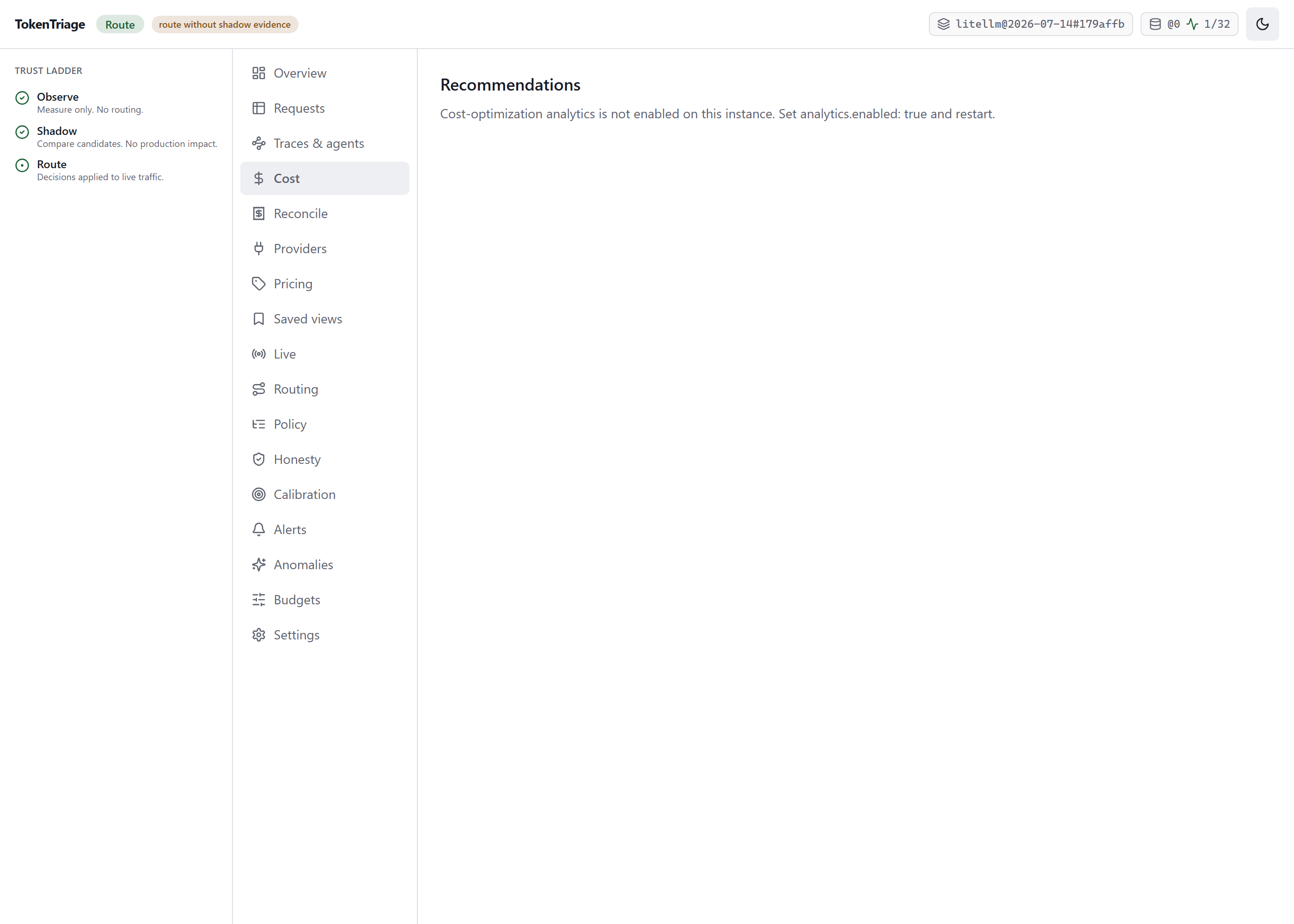
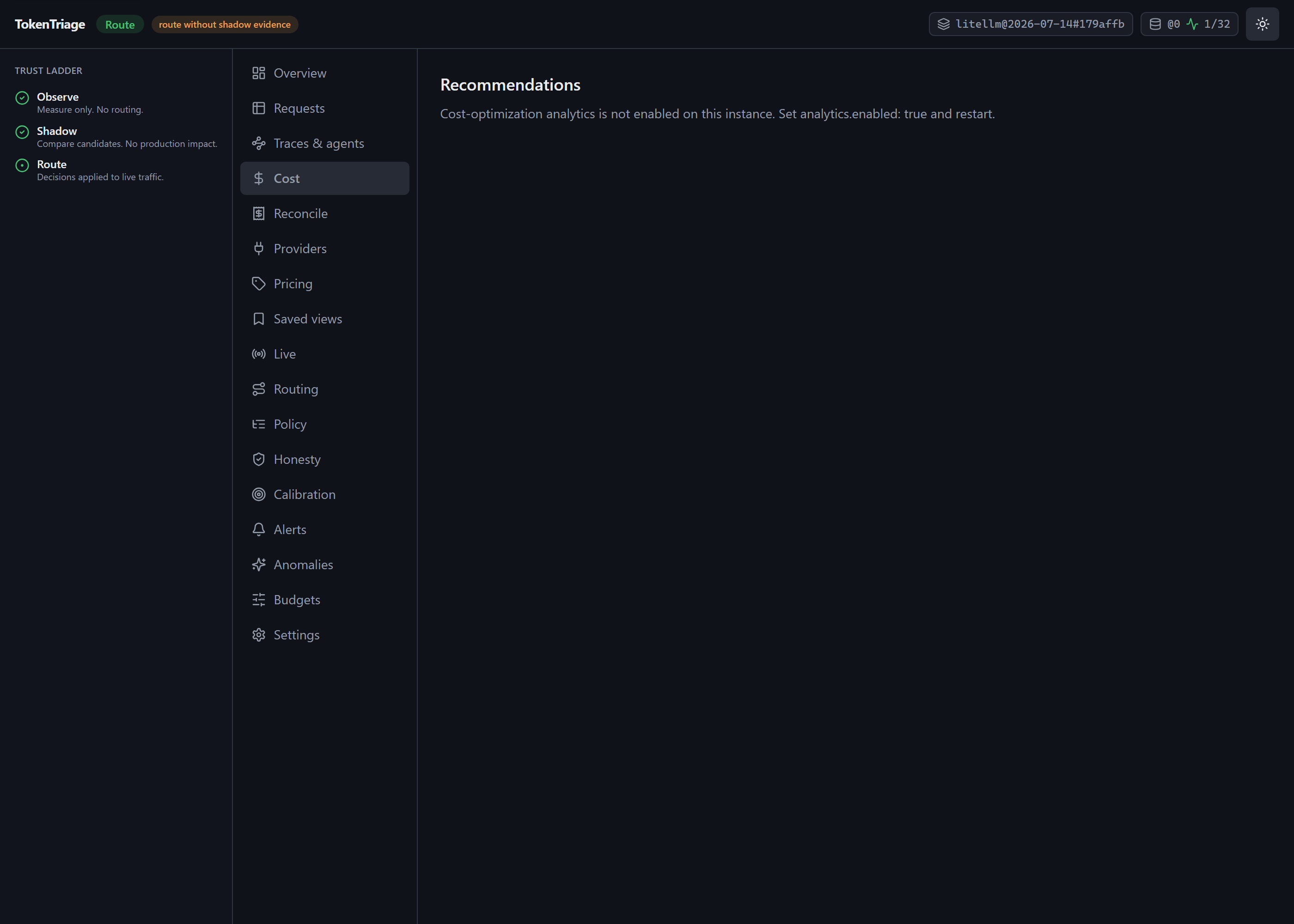
Cost analytics & optimization
Where every dollar goes — and what’s safe to cut
Every request is costed and attributed by model, token type (input / output / cache / reasoning), trace, agent, and MCP tool. The optimizer turns that ledger into recommendations — and grades each one honestly.
- Three savings verdicts: PROVEN (measured on real post-change traffic — never a forward-looking recommendation), ESTIMATED (a modeled projection), or UNPROVABLE (a disclosed refusal).
- Provider-bill reconciliation: match an invoice against the ledger; the residual shows as “unexplained,” never zeroed to force agreement.
- FinOps-ready: hourly rollups, budget burn-down, chargeback and FOCUS exports.
Quality-proven routing
Routing that proves it beat the baseline — or admits it can’t
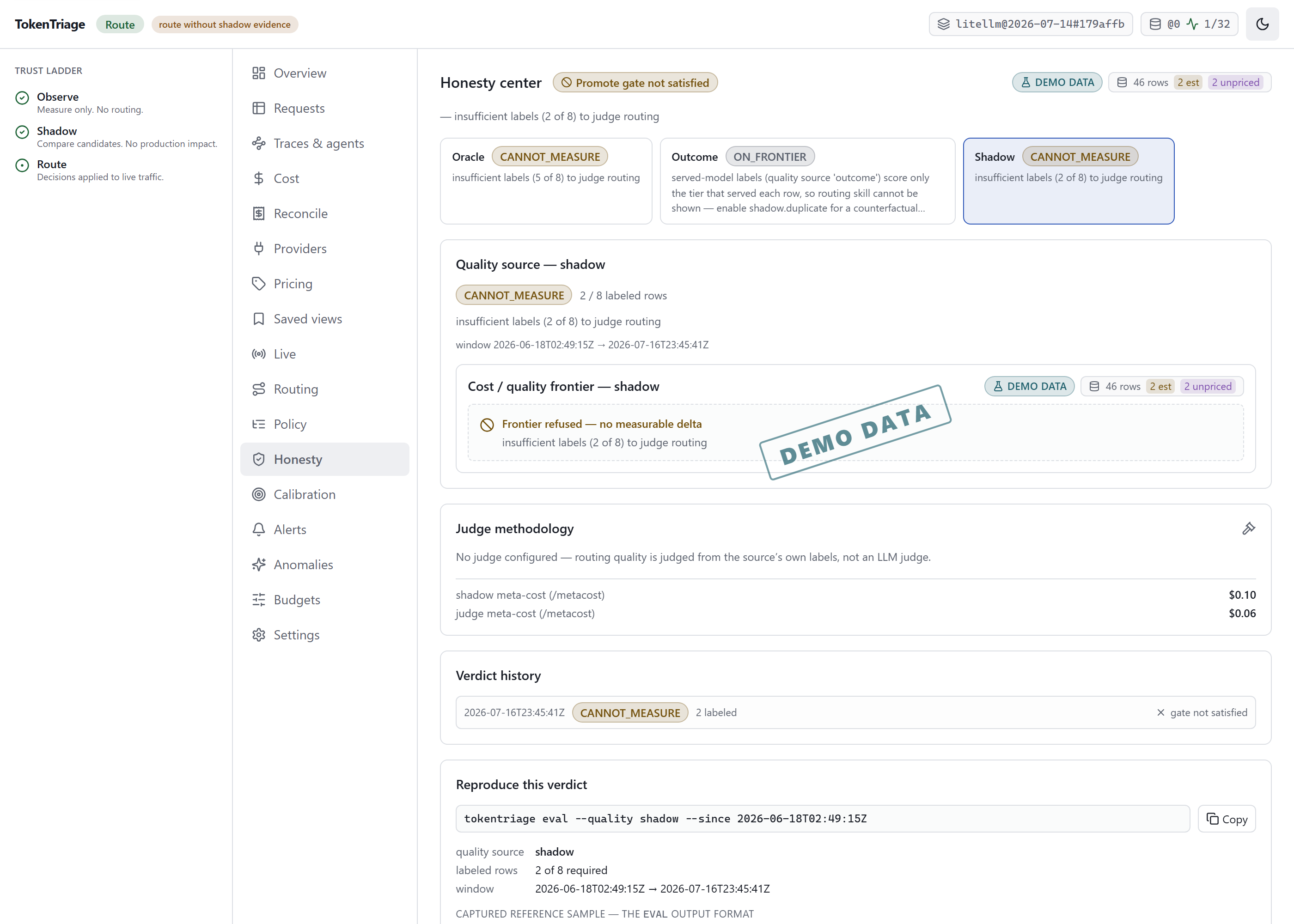
A typed, deterministic policy language decides each route and explains why. The honesty verdict answers one question: does routing beat the zero-router baseline at its own cost?
- Eleven routing strategies ship — complexity thresholds, cost-aware selection, A/B/canary, budget degrade, ordered fallback, judge-graded cascades, and learned/bandit routing.
- Shadow evaluation computes the counterfactual without touching a response — so you see the savings before you enforce them.
- It refuses to fabricate a win. With only served-model labels it can say routing sits ON the frontier; only judged shadow duplication can show a BEAT. Otherwise: an honest refusal, never a number.
The trust dashboard & provenance
Every number traces to one decision log
Each proxied request writes one row to a JSONL decision log. Every surface derives from it, and two surfaces may never disagree. Amounts render through a typed Money component stamped with the pricing snapshot.
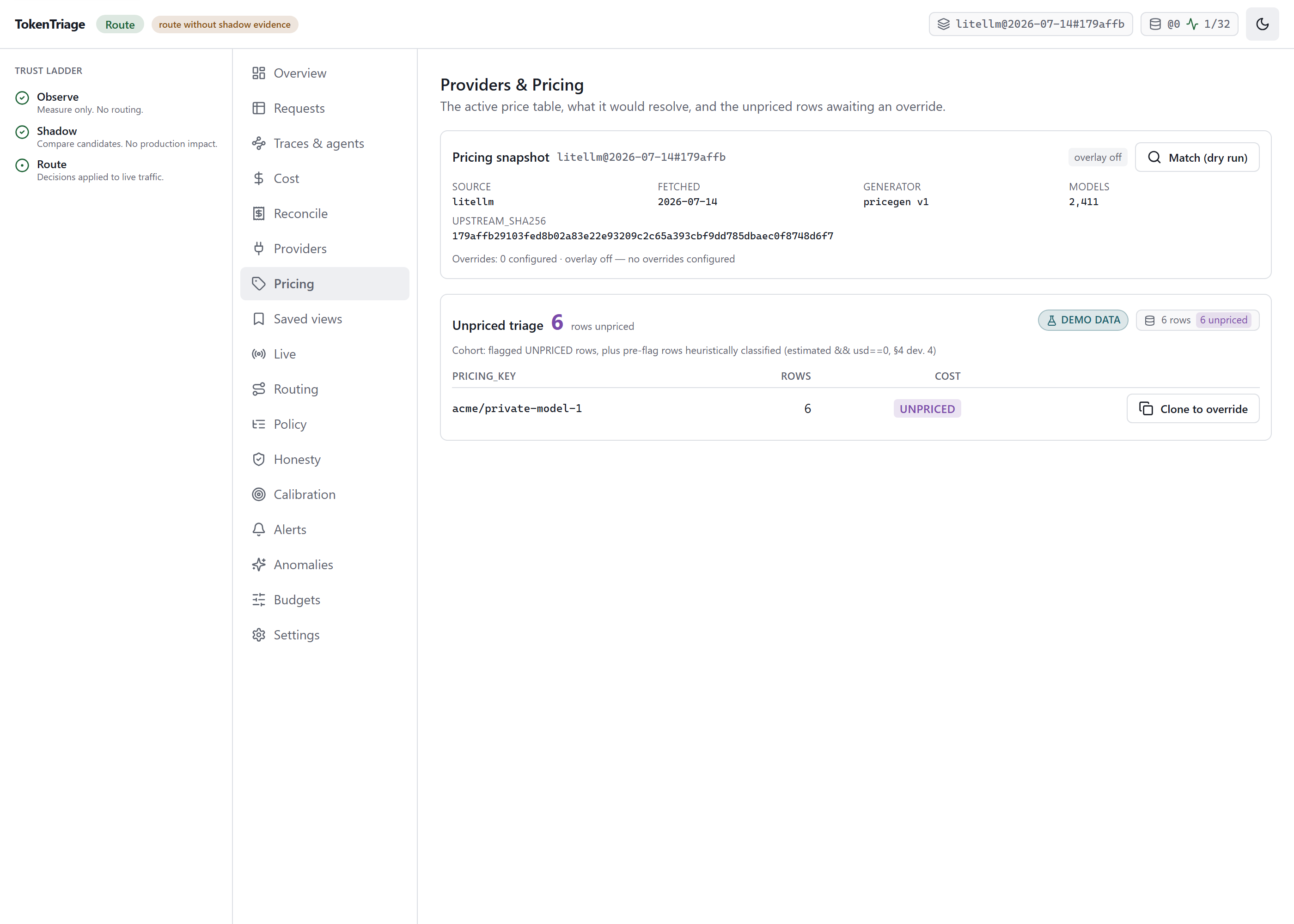
- UNPRICED is not zero. An unknown model yields a null cost and an excluded-row count — never a misleading
$0.00. - EST flags mark any estimated figure; pricing is stamped
source@date#sha7. - “View as table” on every chart, so any pixel can be checked against the rows behind it.
Multi-provider breadth
Four wire dialects in code. Every provider as data.
The binary compiles four wire drivers — OpenAI, Anthropic, Bedrock, and Gemini. Every OpenAI-compatible upstream rides the OpenAI driver with zero new code: adding one is N+1-by-config.
- OpenAI
- Anthropic
- Azure OpenAI
- AWS Bedrock
- Google Gemini / Vertex
- Groq
- Together AI
- Local / self-hosted (vLLM, Ollama)
Opt-in cross-dialect translation (OpenAI ↔ Anthropic, off by default) discloses every dropped parameter rather than silently swallowing it.
Governance, virtual keys & budgets
Limits that fail open — and say so
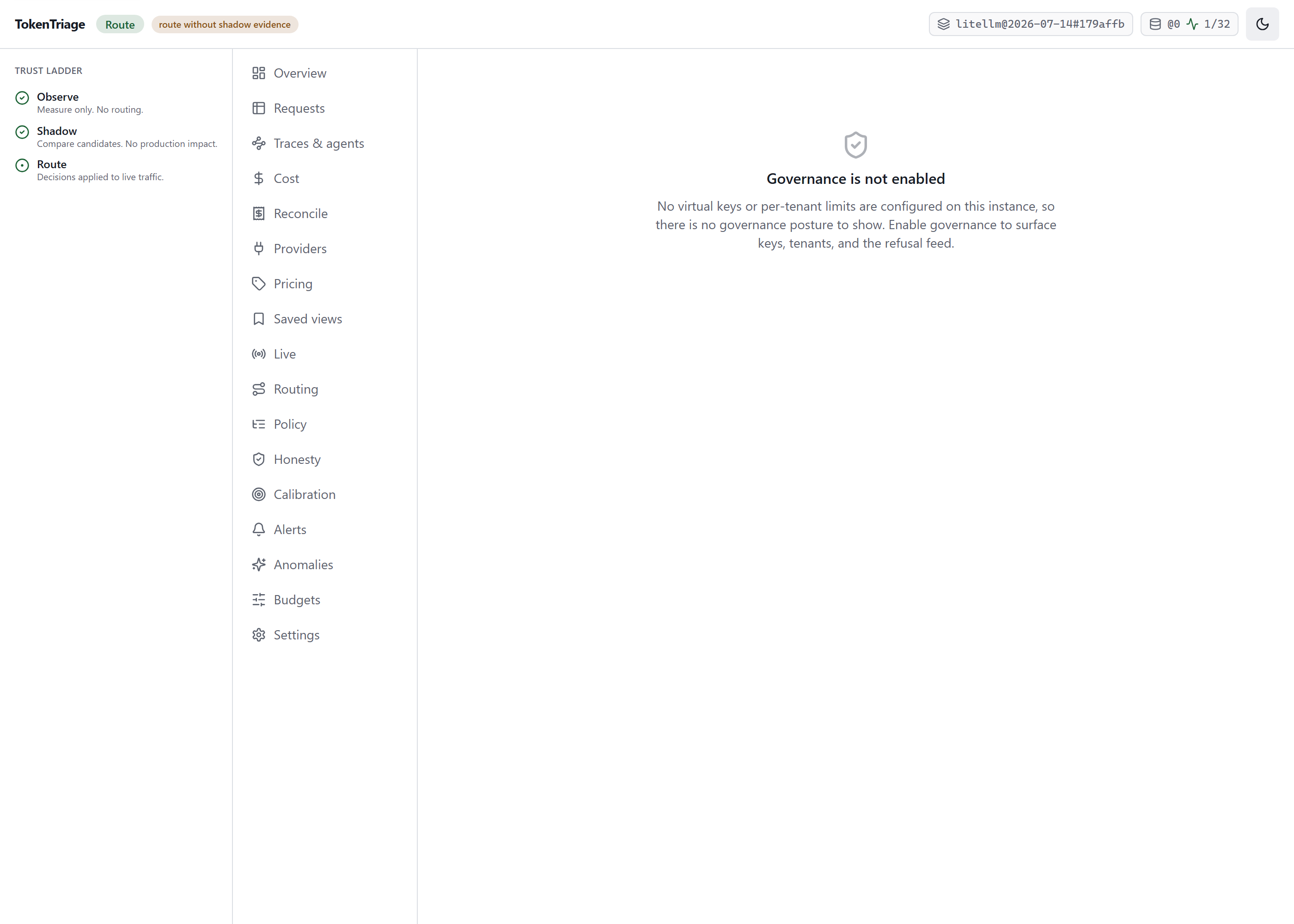
Mint virtual keys (hashed, shown once, stripped before upstream) and enforce per-tenant limits across an org / team / user / key hierarchy. Off by default; shadow-first when you turn it on.
- Six limit types: budget (USD), token & request quotas, RPM, TPM, and concurrency.
- Row equals wire: one function stamps every refusal (401/403/429/503) into both the HTTP response and the ledger row.
- Fail-open with disclosure: a dead accountant suspends enforcement and discloses it — never a fake 429.
fail: closedis an honest opt-in.
Deployment & air-gap
One CGO-free binary. No sidecar. No data files.
The pricing table is compiled in via go:embed; the dashboard SPA is embedded too. Cross-compiles to Linux, Windows, and macOS with no C toolchain.
- Binary
- ≈10.7 MB static (linux/amd64, CGO-free)
- Container
FROM scratch, ≈11 MB (estimated), non-root- Deploy
- Canonical Helm chart, Kustomize, Compose, Terraform
- Secrets
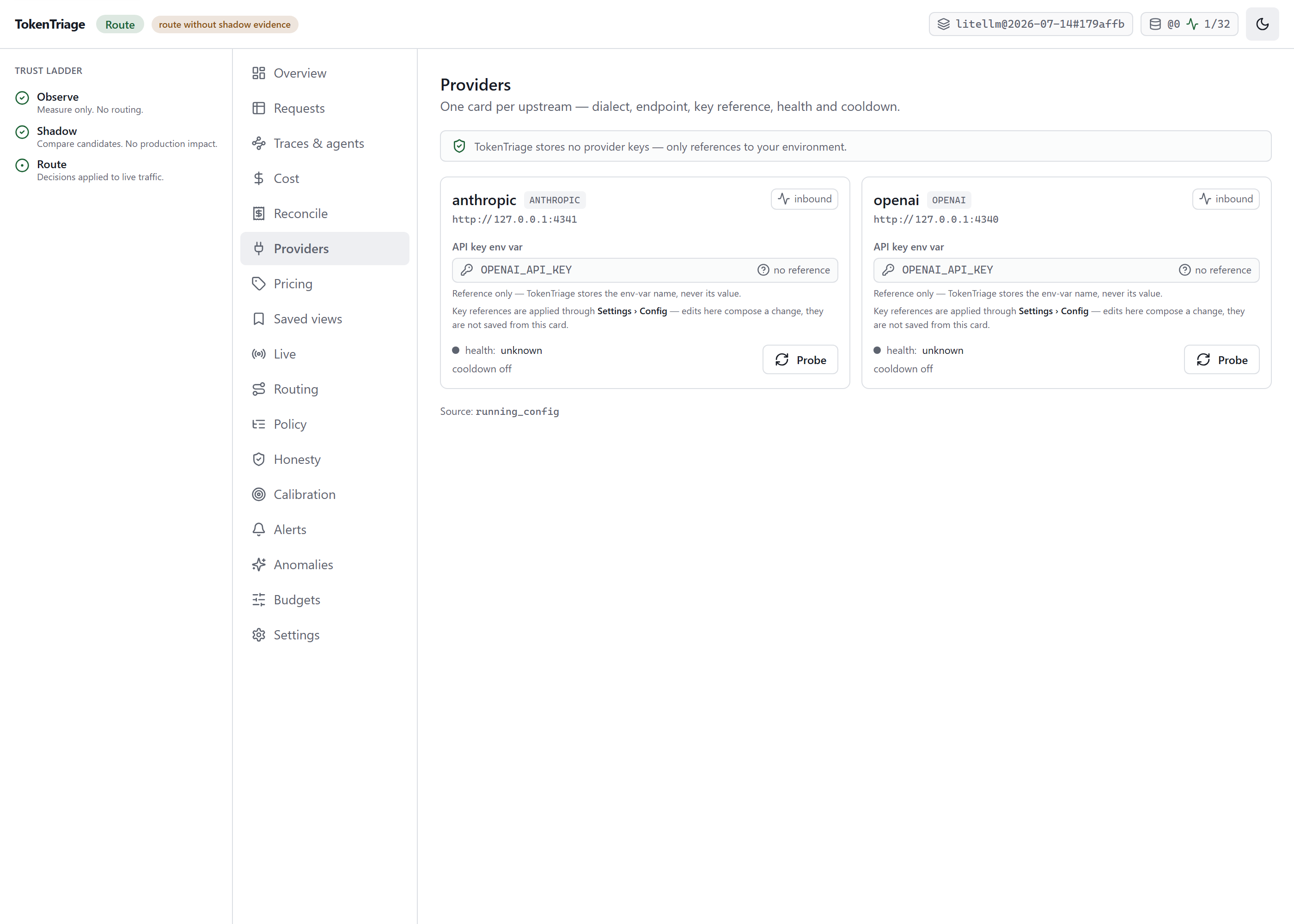
- References only (env-var names) — never values
- Network
- Air-gap profiles dial nothing external by default
Response caching
Off by default, shadow-first, byte-faithful, and honestly costed. The default exact/normalized tier is fully air-gapped — pure Go, dials nothing. Designed to be an honestLLM-router cache: it never claims a hit it can’t prove.
Fail-open, always
A broken ledger must never break your agents. Any internal error fails open to a verbatim passthrough, and the proxied bytes equal going direct — streaming included.
Read the docs, or read the code
Everything here ships in one Apache-2.0 binary. Start with the quickstart, or browse the source.